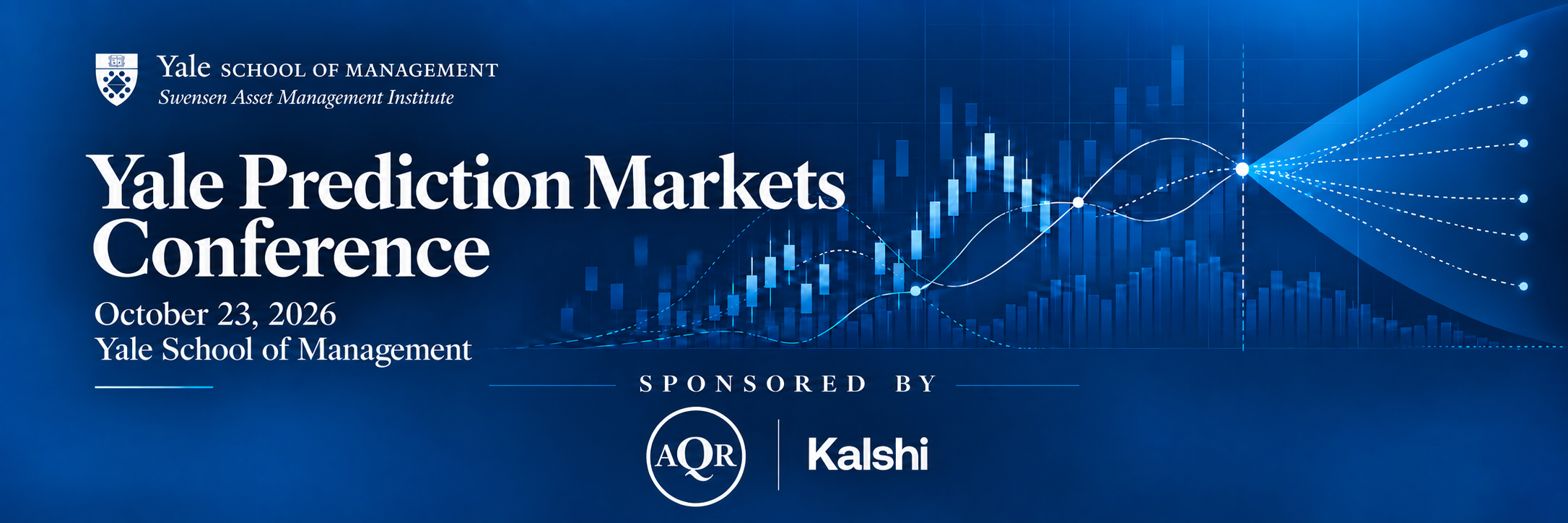
Join scholars, market makers, and policymakers for a day exploring how prediction markets are reshaping forecasting, finance, and decision-making. This event is by invitation only.
Join scholars, market makers, and policymakers for a day exploring how prediction markets are reshaping forecasting, finance, and decision-making. This event is by invitation only.
This conference will examine how prediction markets arrive at their prices — whether accuracy comes from the wisdom of the crowd or a small set of informed traders — and how the information, and noise, they generate spills into traditional financial markets and macroeconomic measurement. Sessions will also discuss how AI agents are beginning to trade on these platforms, what drives capital efficiency under uncertainty, and who ultimately wins and loses as prediction markets scale.
Presenters join from Yale, London Business School, University of Pennsylvania, HEC Montréal, Georgia State University, Boston College, Dartmouth, and the Federal Reserve Board, with a fireside chat featuring Kalshi.
The conference is organized by the following faculty.

Moskowitz's research covers financial markets and investments, including asset pricing, investor behavior, and market efficiency. He is a Research Associate at the NBER and a Principal at AQR Capital Management, and received the American Finance Association's Fischer Black Prize in 2007.
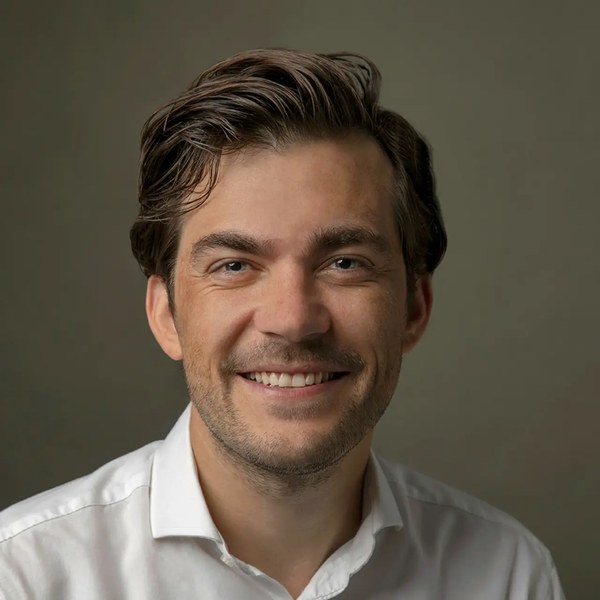
Jensen's research focuses on empirical asset pricing, investor expectations, and behavioral finance, often using large datasets and machine learning. His recent work examines prediction markets and the role of informed traders in shaping market prices.
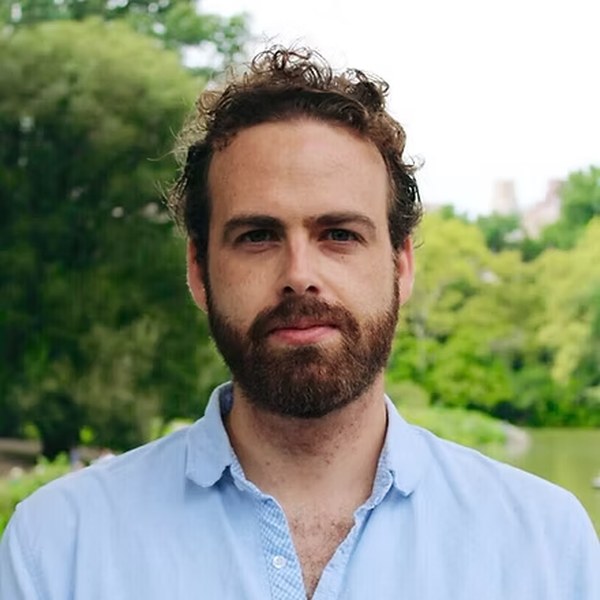
Gómez-Cram's research focuses on asset pricing, investments, and macro-finance. His recent work examines prediction markets as a source of real-time information about corporate earnings, government debt, and monetary policy.
Featured research presentations from leading scholars in prediction markets.
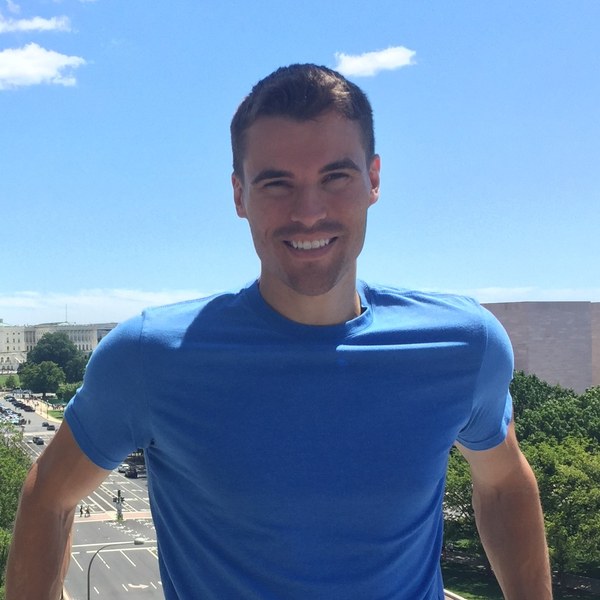
Diercks is Special Adviser to the Board at the Federal Reserve Board of Governors, where his research spans asset pricing, macroeconomics, and monetary policy. He is a co-author of "Kalshi and the Rise of Macro Markets" and "The Treasury Tantrum of 2023," and his work has appeared in the Journal of Political Economy and the Review of Financial Studies.

Goldstein chairs Wharton's Finance Department and directs its Initiative on Financial Policy and Regulation. His research examines financial fragility and crises and the feedback effects between firms and financial markets, and he has advised institutions including the Federal Reserve, the Bank for International Settlements, and the IMF.
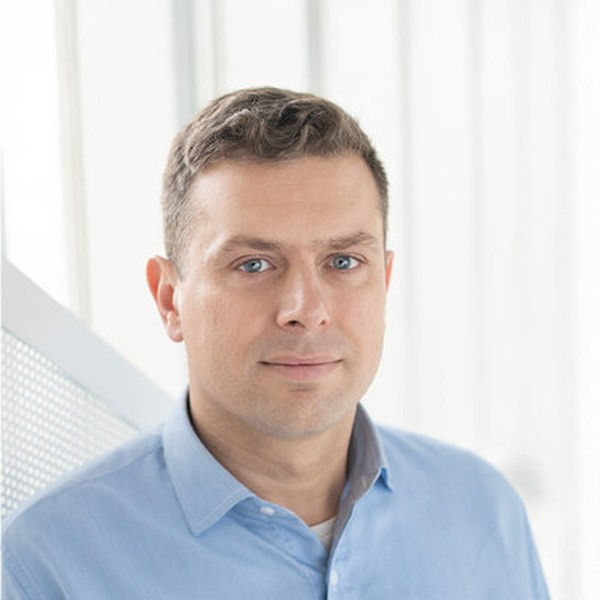
Grégoire's research examines the intersection of finance and technology, with a focus on prediction markets, market microstructure, and algorithmic trading. His recent work studies trading and the distribution of gains and losses in prediction markets, including evidence from Polymarket.
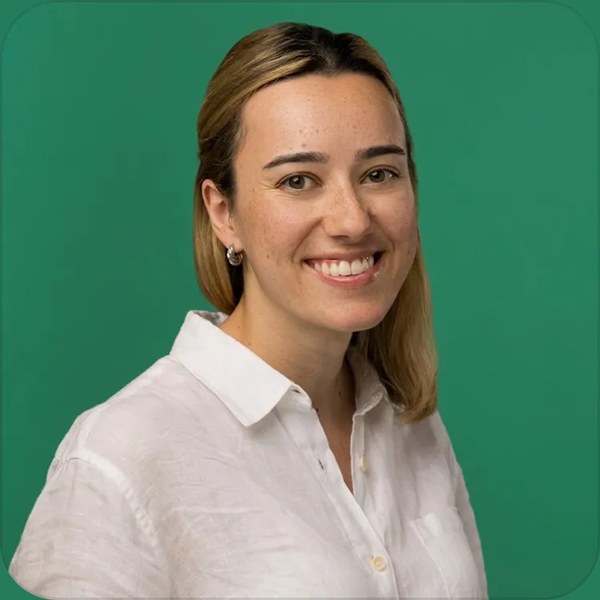
Kagan leads research at Kalshi, where she helped build the exchange's market design and contract-writing functions. She previously worked on the macro trading team at Bridgewater Associates and as an AI strategist at Hebbia.

Shi's research spans investments, financial institutions, behavioral finance, and empirical asset pricing, with particular expertise in hedge funds and mutual funds, including portfolio disclosure and liquidity.
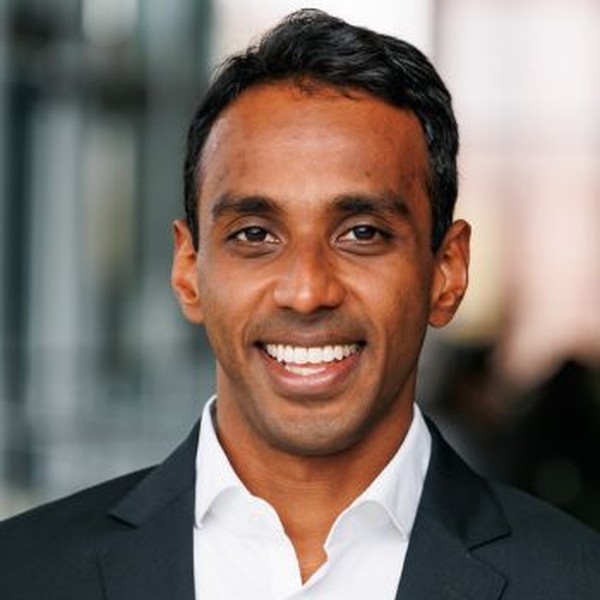
Vasudevan's research sits at the intersection of behavioral economics, financial economics, and macroeconomics, with recent work on how investors' beliefs about other investors shape speculative pricing. He previously worked in Global Macro Strategies at AQR Capital Management, and his co-authored work has appeared in the Journal of Finance and the Review of Financial Studies.

Zitzewitz's research focuses on agency issues in financial and informational industries and on prediction markets. His work includes "Corporate Prediction Markets: Evidence from Google, Ford, and Firm X" in the Review of Economic Studies, as well as event-study research using market prices around the 2016 election.
Commentary on the research presentations from leading scholars in finance.

Frazzini's research covers asset pricing, behavioral finance, and asset management, including the widely cited "Betting Against Beta" (Journal of Financial Economics, with Lasse Pedersen). He was previously a principal at AQR Capital Management, where he headed the Global Stock Selection team, and an associate professor of finance at the University of Chicago; he holds a PhD in economics from Yale.

Peng's research covers investor attention, social networks, sustainable finance, and FinTech, and has appeared in the American Economic Review, Journal of Finance, Review of Financial Studies, and Journal of Financial Economics. She is an associate editor of Management Science and the Journal of Empirical Finance.
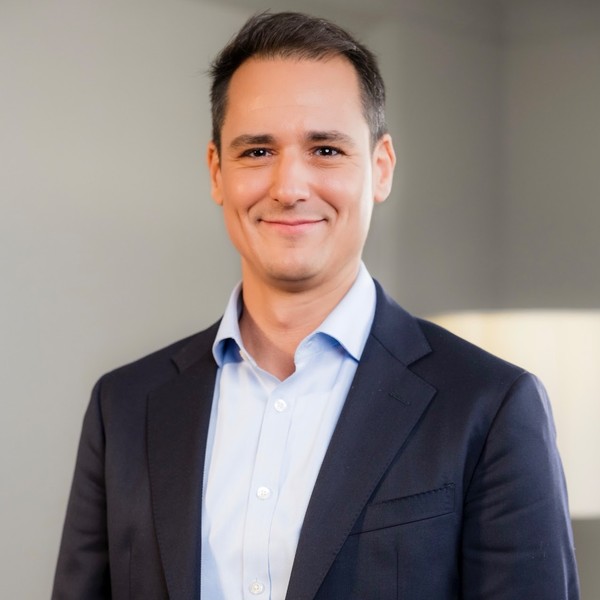
Rossi's research spans FinTech, household finance, machine learning, and asset pricing, including work on how robo-advisors can improve financial decisions. He directs Georgetown's AI, Analytics, and Future of Work Initiative, and his work has appeared in the Journal of Finance, Review of Financial Studies, and Journal of Financial Economics.
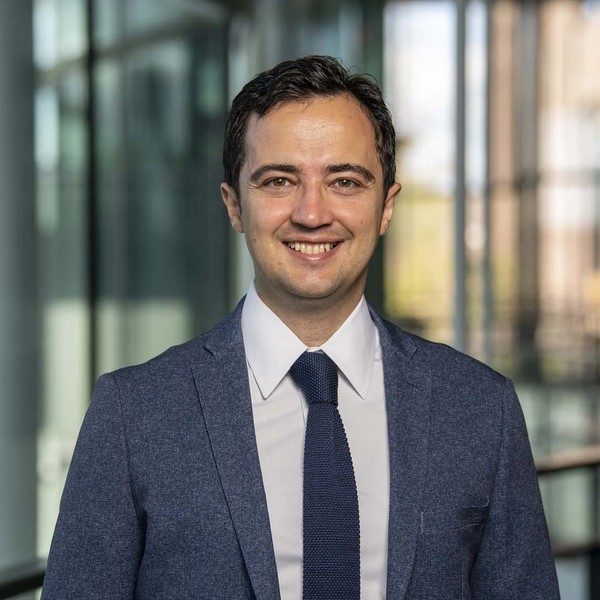
Simsek's research examines the connections between financial markets and the macroeconomy, including how beliefs and speculation drive market fluctuations and business cycles. He is a Research Associate at the NBER and a co-editor of the Journal of the European Economic Association, and his work has appeared in the Journal of Finance and the American Economic Review.
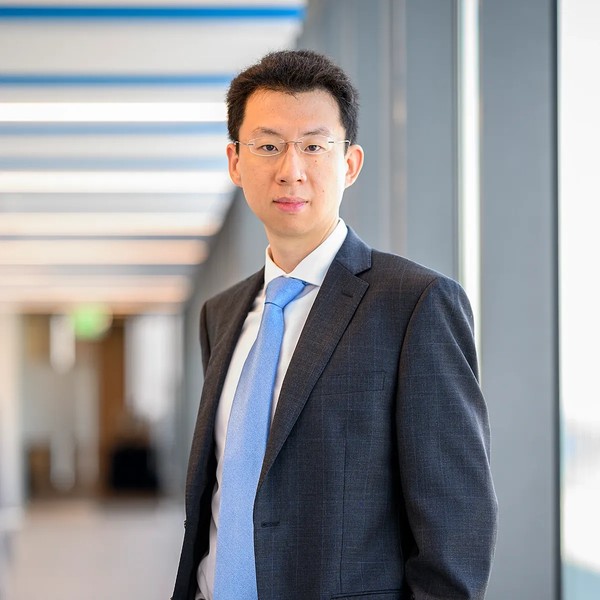
Su's research focuses on empirical asset pricing, in particular the relationship between risk and return, using tools from financial econometrics, machine learning, and AI. His work has appeared in the Journal of Financial Economics and the Review of Financial Studies, and he holds a PhD in financial economics from the University of Chicago.
(Link to papers)



This conference is by invitation only. Please register using the link below. The registration deadline is October 19, 2026.
Register now →Questions? Email swenseninstitute@yale.edu.